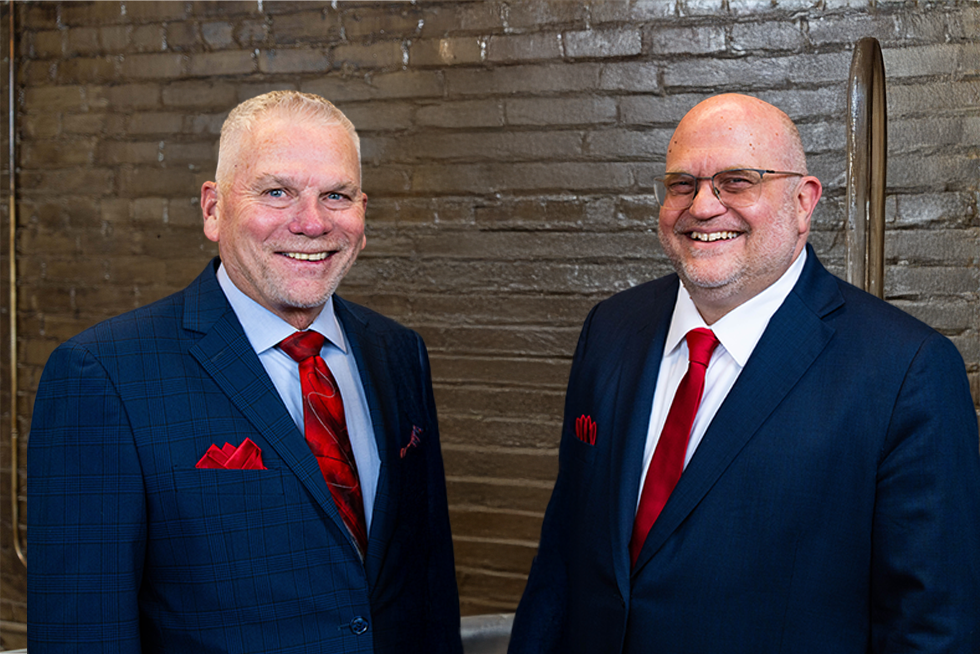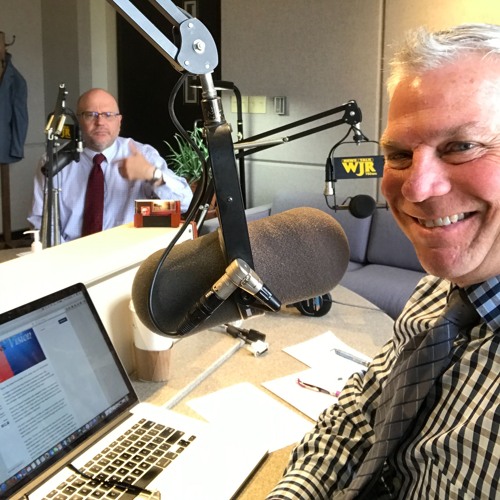
In this episode of Food Secure Nation, Dr. Phil Knight and Gerry Brisson sit down with Triada Stampas, President and CEO of Fulfill Food Bank in New Jersey, for a conversation that challenges how we think about solving hunger in America.

Triada brings a unique perspective shaped by her journey through public policy, government oversight, and food banking leadership. What began as an investigation into SNAP access in New York City became a defining moment—revealing how systems, not effort, often stand between families and the food they need. That insight continues to shape her approach today.

At Fulfill, Triada is leading with a mindset that goes beyond food distribution to focus on outcomes, equity, and long-term food security. She shares how her organization is balancing scale with proximity—being large enough to influence systems, yet close enough to understand community-level impact. From zip code-level strategies to a deeper focus on the “edges” where people are often missed, her work highlights the tension between efficiency and effectiveness in the charitable food system.

This episode explores the difference between addressing hunger and creating food security, the role of policy in shaping outcomes, and the kind of leadership required to question systems that may be producing exactly the results they were designed to deliver.

It’s a conversation about perspective, courage, and the willingness to ask a harder question: not just how we do more—but whether we should be doing something different.

Triada’s story begins far from traditional food banking. Drawn first to medicine, then public policy, then politics, she found her way into the work through a New York City investigation into SNAP access. What she discovered changed the trajectory of her career: families were struggling to afford food while billions in federal nutrition benefits were being left unused because systems had been designed with barriers instead of access. That realization hooked her.

Her leadership reflects a rare combination of policy intelligence, human curiosity, and systems thinking. Raised in Queens in a deeply multicultural community and trained in both social anthropology and public policy, Triada brings a wide worldview to food banking — one that balances data with dignity and numbers with the real lives behind them.

At Fulfill, that perspective is shaping a food bank that is big enough to operate at a systems level, but small enough to see what is happening community by community. Triada described Fulfill’s work at the zip-code level, asking not simply how to move more food, but whether food and resources are reaching the places that are easiest to miss. Her insight was clear: efficiency matters, but if the work only aims for the middle, the most vulnerable people may remain on the edges.

The conversation sharpened a core truth for Food Secure Nation: food insecurity will not be solved by effort alone. Food banks are working hard, but leadership must be willing to question whether the systems we have built are producing the outcomes we say we want. Triada Stampas represents the kind of leader this moment requires — thoughtful, courageous, policy-smart, and unwilling to accept that “more of the same” is enough.

Creating a food secure nation requires leaders who can see the whole system and still notice the edges. That is where the next level of the work begins.

Big enough to shape systems.
Small enough to see people.

Triada Stampas

KBDB fish icon in blue

Triada Stampas

Triada Stampas is the President and CEO of Fulfill Food Bank, where she is helping redefine what it means to create food security at the community level. With a background spanning public policy, government oversight, and hunger advocacy, Triada brings a systems-focused approach to food banking that blends strategy, dignity, and what she calls “policy smarts.”

Before leading Fulfill, Triada held leadership roles at the Food Bank For New York City and Community FoodBank of New Jersey. Her journey into the work began through public service in New York City government, where investigations into SNAP access and systemic barriers to food assistance ignited her passion for fighting hunger at scale. A graduate of Columbia University, Triada combines analytical rigor with a deeply human understanding of the communities food banks serve. She also serves nationally with Feeding America through the Public Engagement Advisory Committee (PEAC).

Triada Stampas

President and CEO of Fulfill Food Bank

Everyone sees the front lines of hunger relief—but who’s aligning the system behind it?

In this episode, Joree Novotny and Mandy Pullaro share how state associations quietly connect policy, partnerships, and people to move entire networks forward. If food insecurity is a systems problem, this conversation reveals where real alignment—and real progress—actually begins.

Most people think they understand how hunger gets addressed in America. They picture the pantry. The food bank. The volunteers packing boxes.

But this episode of Food Secure Nation reveals something bigger.

Featuring Joree Novotny and Mandy Pullaro, this conversation shines a light on the leaders working behind the scenes—the ones connecting entire systems so thousands of organizations can move as one.

And once you see it… you can’t unsee it.

Joree and Mandy don’t just talk about programs—they talk about people, purpose, and the moments that made this work personal. From childhood experiences to life-altering challenges, their stories remind us that food security isn’t theoretical—it’s deeply human.

But here’s where the conversation takes off:

They unpack the role of state associations—the connective tissue of the food security ecosystem:

  • The ones who bring partners to the table
  • The ones who turn conversation into coordinated action
  • The ones who can see the gaps no one else can see
  • And the ones who step in—fast—when it matters most

You’ll hear how:

  • A state can mobilize resources overnight during a crisis
  • Innovation at the local level can reshape national policy
  • And how leadership at scale isn’t about control—it’s about alignment

This episode makes one thing unmistakably clear:

Food security doesn’t happen because one organization works harder. It happens when an entire system works better—together.

If you’ve ever wondered why progress can feel slow…
or what it really takes to move the needle…

This conversation will change how you see the work.

And once you hear it, you’ll understand:

The future of food security isn’t just about feeding people—
it’s about connecting the system that makes it possible.

Good work is happening everywhere—but without alignment, it stays fragmented. The role of a state association is to help that work move together.

Joree Novotny

KBDB fish icon in blue

Joree Novotny

Executive Director, Ohio Association of Food Banks

Joree Novotny leads the Ohio Association of Food Banks, where she works at the intersection of policy, partnership, and large-scale food distribution to strengthen food security across the state. A respected voice in the national hunger relief network, Joree is known for aligning diverse stakeholders—from food banks to government leaders—around practical solutions that improve access and outcomes for families. Her leadership reflects a deep commitment to systems change, ensuring that resources move not just efficiently, but with purpose and impact.

Mandy Pullaro

Chief Executive Officer, Feeding Colorado

Mandy Pullaro serves as CEO of Feeding Colorado, where she brings together a statewide network of food banks to advance coordinated solutions to hunger. With a strong focus on collaboration, advocacy, and innovation, Mandy helps bridge the gap between local service and statewide strategy. She is recognized for elevating the role of state associations as critical connectors—turning shared insight into unified action that strengthens the entire food security system.