Behind every meal served is a system most people never see.

In this episode, Liz Lowe shares her journey from growing up in a food-insecure household to helping organizations across the country build sustainable funding strategies. Alongside Phil and Gerry Brisson, she explores how funding, relationships, and lived experience come together to shape what’s possible in the fight for food security.

This episode flips a core assumption on its head: food banks don’t run on food—they run on funding. And until we fully confront that truth, we will keep limiting what’s possible.

Joined by Liz Lowe, a national fund development leader with lived experience of food insecurity, Phil and Gerry Brisson unpack a reality hiding in plain sight—the way we fund the mission is shaping the mission itself. Every meal distributed, every truck on the road, every partnership formed is not just an act of service—it’s the result of a financial system quietly determining scale, consistency, and impact.

Liz brings both personal conviction and professional clarity, reframing fund development from a “support function” to a central operating force. This isn’t transactional—it’s structural. Funding fuels infrastructure, drives access, enables dignity, and ultimately determines whether the system expands…or stalls.

It challenges the field to rethink who must be at the table and what truly drives change. People experiencing hunger bring essential insight the system cannot afford to ignore. Real progress happens when that perspective is aligned with strong leadership, smart strategy, and sustainable funding.

Because in the end, if we want better outcomes, we can’t just move more food.

We have to rethink what’s underneath it.

Funding isn’t separate from the mission—it’s what allows the mission to exist consistently.

Liz Lowe

KBDB fish icon in blue

Liz Lowe

Liz Lowe is Vice President of Client Relations at the Allegiance Group, partnering with mission-driven organizations to strengthen fund development and build sustainable revenue systems. With over 20 years of experience in the charitable food sector—and lived experience growing up in a food-insecure household—Liz brings both insight and authenticity to her work. She is increasingly using her voice to elevate the realities of food insecurity and advocate for solutions grounded in dignity, community, and long-term impact.

Liz Lowe

Vice President of Client Relations at the Allegiance Group

This episode goes beyond inspiration and gets to the real challenge at the heart of food security: not a lack of caring, not a lack of ideas, but a lack of connection.

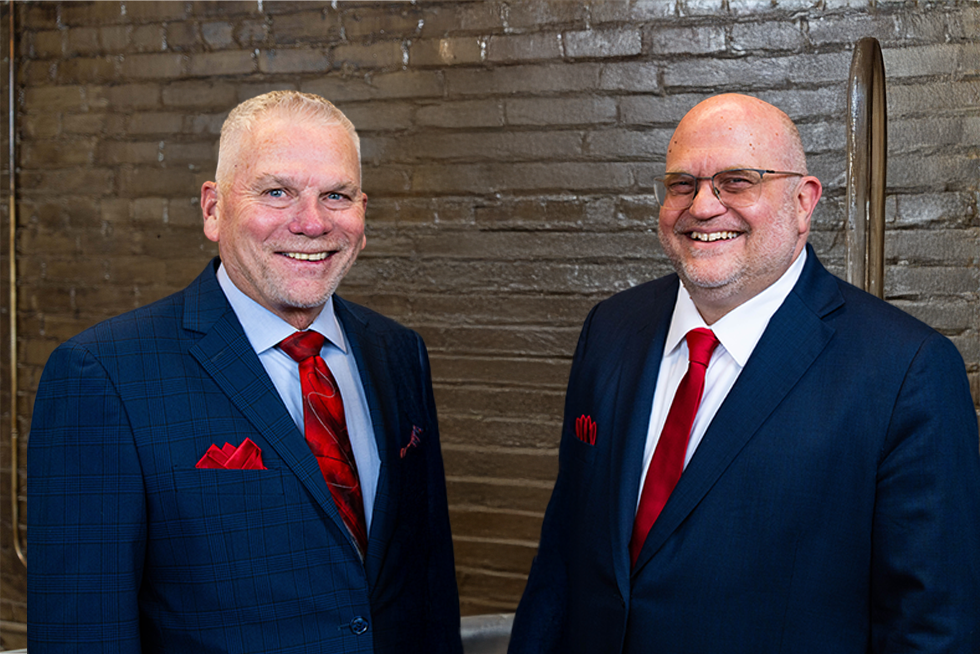
Dr. Phil Knight and Gerry Brisson reflect on decades of experience to unpack why so much good work struggles to scale, and why better frameworks, shared learning, and the Six Dimensions of Food Security may be the key to moving from isolated effort to real national progress. If you want to understand what connects the voices, vision, and momentum behind Food Secure Nation, this is the episode that brings it all together.

This episode of Food Secure Nation pulls back the curtain on a hard truth: food insecurity has never been a problem of caring, or even a lack of good ideas. It has been a problem of connection.

After decades of experience across communities, systems, and even continents, Dr. Phil Knight and Gerry Brisson confront a reality many in the field feel but rarely name. Progress is happening, but the system still feels stuck. Why? Because some of the best thinking is still happening in isolation. Great ideas emerge, inspire, and then disappear before they can be shared, tested, and scaled.

This conversation marks a turning point, because it does more than name the problem. It begins to name the path forward.

Through the lens of Know Better, Do Better, we introduce a more powerful way ahead, rooted in shared learning, practical application, and a unifying framework: the Six Dimensions of Food Security. From something as simple as winter squash to complex healthcare partnerships, they show how better thinking can sharpen decisions, strengthen systems, and unlock better outcomes, often without adding cost.

This is where the conversation moves beyond commentary. It becomes an invitation.
With a vision to connect leaders, ideas, and real-world pilots across the country, this episode lays the groundwork for a new kind of progress, one that turns insight into action and isolated effort into collective impact.

Because the future of food security will not be built by working harder in silos.

It will be built when we learn together, act together, and scale what works.

And as the guys remind us:
“The challenge was never knowledge… it was connection.”

Hope is a dangerous thing… if it never turns into strategy.

Gerry Brisson

KBDB fish icon in blue

What does food security actually look like when you zoom out and see the whole system?

In this episode, Joree Novotny and Mandy Pullaro return to unpack the six dimensions of food security—not as theory, but as lived reality from a statewide lens. From balancing limited resources with dignity and choice, to redefining the role of people experiencing hunger as partners in the solution, this conversation challenges how we think about impact. Along the way, they connect food insecurity to economic stability, health, and housing—revealing that lasting progress doesn’t come from doing more of the same, but from aligning systems around the people they serve.

In this powerful follow-up conversation, Joree Novotny and Mandy Pullaro move beyond theory and into the real-world tension of building food security across all six dimensions—availability, access, utilization, stability, sustainability, and agency. What becomes clear quickly is this: food security isn’t a checklist—it’s a balancing act.

From their vantage point leading statewide systems, Joree and Mandy unpack the hard truth that these dimensions don’t always align neatly. Limited resources can strain the ability to prioritize dignity and choice. Systems built for emergency response are now carrying the weight of chronic need. And yet, within that tension lies opportunity—if we’re willing to rethink the system itself.

A defining theme of the episode is agency—not as a luxury, but as a multiplier. When people experiencing hunger are treated as participants rather than recipients, outcomes improve—not just for individuals, but for entire households and systems. The conversation challenges long-held assumptions and reframes food insecurity as deeply connected to economic stability, health, and housing—not just food supply.

The episode also brings a powerful shift in perspective: the people we serve are not problems to be solved—they are essential partners in the solution. Through listening sessions, policy engagement, and lived-experience storytelling, both leaders demonstrate how systems become more effective when they are built with people, not for them.

And then comes the gut-check: we reveal what we truly believe by how we behave. Whether it’s how we treat donors, partners, or neighbors seeking support, the system reflects our values in action. That question lingers—and it should.

This episode doesn’t offer easy answers. Instead, it offers something more valuable: a clearer lens. One that shows food security as an interconnected system requiring alignment, humility, and leadership at every level.

Because when those six dimensions begin to move together—that’s when transformation becomes possible.

Our network was built for emergencies—but today, we’re part of people’s ongoing strategy for stability.

Mandy Pullaro

KBDB fish icon in blue

Joree Novotny

Executive Director, Ohio Association of Food Banks

Joree Novotny leads the Ohio Association of Food Banks, where she works at the intersection of policy, partnership, and large-scale food distribution to strengthen food security across the state. A respected voice in the national hunger relief network, Joree is known for aligning diverse stakeholders—from food banks to government leaders—around practical solutions that improve access and outcomes for families. Her leadership reflects a deep commitment to systems change, ensuring that resources move not just efficiently, but with purpose and impact.

Mandy Pullaro

Chief Executive Officer, Feeding Colorado

Mandy Pullaro serves as CEO of Feeding Colorado, where she brings together a statewide network of food banks to advance coordinated solutions to hunger. With a strong focus on collaboration, advocacy, and innovation, Mandy helps bridge the gap between local service and statewide strategy. She is recognized for elevating the role of state associations as critical connectors—turning shared insight into unified action that strengthens the entire food security system.

“When you center the person experiencing hunger, everything else gets clearer — strategy, partnerships, even accountability.”

As she steps down as CEO of Feeding America, Claire Babineaux-Fontenot shares the leadership philosophy that helped reshape the national hunger conversation. At the heart of it: agency. What happens when people experiencing hunger are no longer on the margins—but at the center of decision-making? This episode explores the courage, tension, and impact of that shift.


In this episode of Food Secure Nation, Dr. Phil Knight and Gerry Brisson welcome Claire Babineaux-Fontenot, CEO of Feeding America, for a conversation about leadership, dignity, and the evolution of the national hunger-relief movement. As Claire prepares transition from her role leading the nation’s largest hunger-relief network, she reflects the leadership lessons, cultural shifts, and strategic decisions that helped reshape how the Feeding America network understands its mission.

At the heart of the conversation is a simple but transformative idea: the charitable food system does not exist to serve institutions—it exists to serve people experiencing hunger. Claire describes how, early in her tenure, she challenged two competing assumptions within large systems: that national organizations should either direct the work of local partners or simply serve them. Instead, she reframed from the mission around a shared commitment—food banks, national leaders, partners, and communities working together as co-equals in service to families facing hunger.

This shift helped reorient the network’s thinking toward the lived experience of people facing food insecurity. Rather than treating individuals experiencing hunger as passive recipients of charity, Claire and the network began recognizing them as experts in their own experience. By elevating lived expertise—listening to people not just as storytellers but as guides for decision-making—the network began asking better questions and designing better solutions.

One example came during the development of Feeding America’s first federated Network Strategic Framework. While leaders discussed how the system should improve data collection, a participant with lived experience challenged the group with a simple insight: if data truly serves people facing hunger, then it should help them answer the most immediate question—Where can I find food? That moment reshaped the conversation and demonstrated how centering lived experience can sharpen strategy and reveal blind spots that institutions alone might miss.

Claire also reflects on a powerful moment during the White House Conference on Hunger, Nutrition, and Health, where she brought individuals with lived experience as her “entourage.” When offered a seat among dignitaries at the front of the room, she chose instead to sit in the back with the individuals whose voices had helped shape national policy. In that moment, as one woman realized the President of the United States was speaking words drawn from her own story, Claire witnessed what true agency looks like—when people experiencing hunger are not spoken for but heard.

Throughout the conversation, Claire emphasizes that meaningful change in complex social systems requires both humility and courage. Leaders must be willing to evolve, to acknowledge past assumptions, and to build systems that invite participation rather than impose solutions. When people experiencing hunger are seen as partners in solving the problem—not as problems to be solved—the path to lasting progress becomes clearer.

As the episode concludes, Knight and Brisson reflect on Claire’s legacy: a leadership style rooted in compassion, curiosity, and truth-telling. By helping the hunger-relief network refocus on dignity, agency, and collaboration, Claire’s influence continues to shape how communities across the country work together to build a more food secure nation.

Agency doesn’t slow the work down. It makes the work finally fit.

Claire Babineaux-Fontenot

KBDB fish icon in blue

Claire Babineaux-Fontenot is the outgoing CEO of Feeding America, the nation’s largest hunger-relief organization. A nationally recognized leader on poverty, dignity, and systems change, she has guided the network through some of the most challenging moments in recent history — including the COVID-19 pandemic and rising food insecurity across the country.

Before joining Feeding America, Claire built a distinguished career in law and corporate leadership, including serving as Executive Vice President and Treasurer at Walmart. But what defines her leadership is not just her résumé — it’s her conviction.

During her tenure, Claire helped reframe the national hunger conversation by centering the voices and experiences of people facing food insecurity, elevating dignity and agency as essential to lasting solutions. Her leadership has been widely recognized, including being named one of TIME’s Women of the Year.

Claire’s work continues to shape how leaders across sectors think about trust, equity, and what it truly means to build a food secure nation.

Claire Babineaux-Fontenot

Former CEO of Feeding America

Gerry and Phil sit down with Virginia Witherspoon, the Executive leading Channel One Food Bank in MN.

She chairs the National Advisory Committee for Feeding America. Lawery, CEO and Chairperson – 3 Chairs, Unique Perspectives from Virginia Witherspoon.


What happens when one leader sees the food security system from three different vantage points at once?

In this episode of Food Secure Nation, Dr. Phil Knight and Gerry Brisson sit down with Virginia Witherspoon to explore how legal training, local leadership, and national governance intersect in a system under pressure.

From navigating post-pandemic resource challenges to rethinking how dignity shapes service delivery, this conversation offers a rare look at how real decisions are made—and what it will take to build a stronger, more aligned national response to hunger.

Dignity is free. It costs nothing to welcome someone well, trust them, and treat them like a shopper instead of a client.

Virginia Witherspoon

KBDB fish icon in blue

Virginia Witherspoon serves as CEO of Channel One Regional Food Bank and Chair of the National Advisory Committee for Feeding America. A trained attorney, she brings a unique blend of legal precision, operational leadership, and governance expertise to the fight against hunger. Her work is grounded in a deep commitment to dignity, data-informed decision making, and ensuring that the voices of people experiencing food insecurity shape the systems designed to serve them.

Virginia Witherspoon

Executive and Operational Leadership

Bridging Policy and Human Experience

Food Secure Nation welcomes Dr. Sheril Krishenbaum, a renown writer and scientist who cares deeply about this stubborn challenge of food security. A positive solution oriented scholar who brings her unique insight to both policy and practices of addressing hunger and creating food security.

Dr. Phil Knight and Gerry Brisson are joined by Dr. Sheril Kirshenbaum, a nationally recognized expert in science, policy, and governance, for a timely and deeply substantive conversation on food security in America.

At the heart of the discussion is a shared conviction: food insecurity is not a mystery—it is a systems problem. And systems problems require more than compassion or slogans; they demand understanding, alignment, and accountability.

Using the Six Dimensions of Food Security—availability, access, utilization, stability, sustainability, and agency—the conversation explores how food insecurity is shaped not by a single failure, but by the interaction of policies across nutrition, health care, workforce participation, agriculture, and state–federal partnerships. Decisions made far from kitchen tables often ripple through families’ lives in profound and unintended ways.

Dr. Kirshenbaum brings a rare dual perspective: rigorous academic research paired with firsthand experience inside federal policymaking. She highlights how well-intentioned policies—particularly around SNAP, work requirements, and benefit eligibility—can misalign with real human behavior, creating financial cliffs and administrative burdens that discourage progress rather than support it. These misalignments are not theoretical; they shape daily decisions for families trying to stay afloat.

A central theme of the episode is trust. When governments and institutions fail to deliver on promised support, the damage extends beyond immediate funding gaps. It erodes trust among families, schools, nonprofits, and community organizations—forcing systems designed for long-term stability into perpetual crisis mode. Rebuilding that trust, the conversation argues, is as critical as restoring resources.

The episode also challenges simplistic narratives about hunger. Food security, done well, is not about dependency. It is about stability, dignity, and agency—designing systems that allow people to participate fully in their families, their work, and their communities. Storytelling matters, but only when paired with measurable outcomes and policy coherence that actually improves lives.

Ultimately, this conversation reframes food security as a shared responsibility—not a choice between government or charity, but a coordinated effort where each does what it is uniquely equipped to do, and does it well.

A food secure nation is built not by good intentions alone, but by aligned systems, earned trust, and policies centered on real human outcomes.

KBDB fish icon in blue

Dr Sheril Kirshenbaum shares her insights on Food Security.

Dr. Sheril Kirshenbaum joins the show to share her unique insights on the intersection of science, policy, and the American dinner table. As an Emmy Award-winning scientist at Michigan State University and host of the PBS series Serving Up Science, Sheril bridges the gap between rigorous academic research and the real-world decisions made in the halls of government.

In this episode, she joins Dr. Phil Knight and Gerry Brisson to dissect why food insecurity is a “systems problem” rather than a mystery. From the impact of federal SNAP policies to the critical role of institutional trust, Sheril reveals how the Six Dimensions of Food Security shape the lives of every American family. Her perspective challenges us to move beyond simple narratives and toward a food-secure nation built on dignity, agency, and measurable outcomes.

Dr. Sheril Kirshenbaum

American Science Writer and Scientist

The Six Dimensions of Food Security

Policies, programs and being people centric helps create a stable food supply chain. Scott Piggott, a farmer discusses with Gerry and Phil the realities of how programs designed to support agriculture need to be stable so our access to food is as well.

In this episode of Food Secure Nation, Dr. Phil Knight and Gerry Brisson lay down the framework that will guide the entire series: the Six Dimensions of Food Security.

They start by naming what most people in this work already feel in their bones: food insecurity persists not because people don’t care, not because we lack food, and not because we lack committed organizations, donors, volunteers, and public servants. Food insecurity persists because it doesn’t live in just one place. It shows up differently depending on where you stand—access, affordability, nutrition, dignity, reliability—and when we focus on only one piece, we might make progress, but we rarely make it last.

That’s the point of the six dimensions: not to tell people what to think, but to help all of us think better—to step back, see the whole system, and understand where misalignment creates gaps families can fall through.

Gerry walks through the six dimensions in plain language:

  • Availability – Is there food at all?
  • Access – If it exists, can you reach it and afford it?
  • Utilization – Is it the right food for your life, culture, and health—and can you actually use it?
  • Agency – Do you have the capacity, choice, and control to turn what’s available into food security for your household?
  • Stability – Will it be there when I need it?
  • Sustainability – Will it be there as long as it’s needed?

A key insight lands hard: we need solutions in each dimension, and we must design any solution with all six dimensions in mind. Build a grocery store? Great—unless it’s unaffordable, unreachable, culturally mismatched, too complex to use, unstable, or dependent on fragile funding.

Phil and Gerry make it memorable with two analogies: a marching band (you can’t build a band out of only tubas) and a football team (a great quarterback without a line gets crushed). Translation: your lane matters—but your lane isn’t the whole road.

The episode closes with the heart of the show’s mission: communities become food secure when strong efforts stop operating in isolation and partners understand how their work fits together. The next episodes bring experts to each dimension—starting with Claire Babineaux-Fontenot on Agency, then voices like Stacy Dean and Dr. Dawn Opel to deepen the conversation.

Food for Thought: You don’t have to do everything to create a food secure community, but everything does have to get done. The question is: Which dimension am I strongest in, and who do I need beside me for the rest?

KBDB fish icon in blue

Scott Piggott shares his insights on Food Security.

As the Executive Director of the Michigan Corn Growers Association and a veteran leader in agricultural policy, Scott brings over 20 years of expertise to our discussion on the Stability of our food systems.

He joins the show to talk about how policies designed to support farmers are the bedrock of a reliable food supply chain for every American household. From his work with the Michigan Farm Bureau to his role on the Food Bank Council of Michigan, Scott reveals why a stable agricultural framework is essential to moving from awareness to bold action.

Scott Piggott

Executive Director of the Michigan Corn Growers Association

  • The Six Dimensions of Food Security
    No.
    1
    Food Safety Infrastructure | Utilization

    The Six Dimensions of Food Security

    If our goal is a food secure America, changemakers need to consider all six pillars of food security when we think about our work.

Why Food Insecurity Still Exists in America

The United States has more than enough food in aggregate and one of the world’s most sophisticated food systems. Yet food insecurity persists year after year. The reason is not a single failure. It is a set of reinforcing pressures that keep many households one missed paycheck, one medical bill, or one rent increase away from running out of food.

This inaugural episode invites listeners to step back and look honestly at how our food system evolved. From the agricultural breakthroughs that made the United States a global breadbasket, to the birth of food banking as a way to distribute surplus, the system did what it was designed to do. But the world changed—and the conversation didn’t keep up.

Food Secure Nation exists to change that conversation.

This show begins with a simple but uncomfortable truth: food insecurity is something we created—and therefore something we can solve. Not with slogans. Not with blame. But with better thinking, better alignment, and better courage.

In America, 42 million people live with food insecurity. Not because we lack food—we waste nearly 40% of what we produce—but because access, systems, and priorities don’t line up. Hunger is visible. Food insecurity is quieter, more complex, and far more consequential.

Food insecurity touches everything:

  • A child’s ability to learn
  • A parent’s health and mental well-being
  • A worker’s productivity
  • A community’s stability

And yet, we often talk about it as if it’s someone else’s problem—or worse, a personal failure. It’s neither.

This is not a show about charity. It’s about responsibility. Not about guilt, but possibility.

Not about having all the answers but about asking better questions—together.

We believe dignity matters. Nutrition matters. Consistency matters. And solutions only work when they meet people where they are, without judgment. Solving food insecurity isn’t about doing more of the same; it’s about doing the right things, at the right level, with the right partners.

Our commitment is simple: to bring forward the evidence, the voices, the wisdom, and the urgency needed to prove that food insecurity in America can be solved—and to invite anyone who cares about their community, their workforce, their children, or their future to be part of that work.

Because hunger may be loud—but food insecurity is quieter, deeper, and more dangerous.

And when we know better, we can do better. That’s how we build a Food Secure Nation.

What the numbers say (recent years)

  • Roughly 12 to 14% of U.S. households (over 15 million households, about 40 million people) have experienced food insecurity in recent years.
  • The rate rose sharply after pandemic-era supports tapered and inflation surged: 10.2% (2021) to 12.8% (2022) to 13.5% (2023).
  • More than half of food-insecure households include a full-time worker, showing this is also a working-family issue.

SNAP participation reduces the likelihood of being food insecure by about 30%, but many eligible households are not enrolled, and benefits can fall short by month-end.


What it would mean to solve this

“Solved” means that every person can reliably obtain enough nutritious food in every season and region, including when shocks hit. In practice, that would look like:

  • Food insecurity becomes rare, not cyclical. Rates do not spike with recessions, disasters, or policy rollbacks.
  • Disparities narrow and then disappear. Households with children, single-parent families, and Black, Hispanic, and Native American households are no longer systematically more at risk.
  • Support systems catch people quickly. Short-term hardship does not become long-term instability.


Why it persists: a system that reinforces itself

Food insecurity is best understood as a set of linked loops. Low resources reduce food purchasing power. Food insecurity then increases stress and worsens health, which can reduce work capacity and raise expenses, deepening the original problem. Safety net programs counteract this loop, but gaps in access, adequacy, and coordination limit their ability to offset the pressures fully.

The evidence points to a consistent set of persistent barriers:

  • Low income and low wages: Households cut food first when money is tight.
  • High essential expenses: Housing, utilities, transportation, and healthcare costs force trade-offs.
  • Safety net gaps and shortfalls: Under-enrollment, eligibility limits, and benefit adequacy issues persist.
  • Administrative burden and stigma: Complex processes deter enrollment and consistent use.
  • Unequal burden across communities: Rates remain higher among Black, Hispanic, and Native American households.
  • Physical access barriers: Distance and transportation can make affordable, nutritious food harder to reach.
  • Fragmented governance: Programs seem to create gaps and diffuse accountability.


What’s changing now and the questions worth watching

Recent years have shown how quickly food insecurity can move when policy and prices change. Several changes are reshaping the landscape:

  • Policy whiplash as a driver: What happens when temporary supports expire, and which supports become durable over time?
  • The post-2021 SNAP benefit baseline is higher due to the Thrifty Food Plan update, but does it keep pace with local costs and end-of-month gaps?
  • Summer nutrition: With Summer EBT beginning in 2024 and more states adopting universal free school meals, will child food hardship stabilize outside the school year?
  • Access is evolving: SNAP online purchasing is now nationwide, but will delivery reach rural areas and households with limited digital access?
  • National ambition meets local execution: The federal goal to end hunger by 2030 is a strong signal, but which actors are accountable for measurable progress and equity in outcomes?


Why this matters for the conversation

If food insecurity were only about food supply, it would already be solved. The hard part is the system: income, costs, access, program design, and resilience through shocks. Bring your view of what is most underestimated, what is working, and where the real trade-offs show up in practice.

Dignity: Why it is important and what we mean when we say we want to improve dignity for the people served by our work.

Dignity refers to the inherent worth and value of every individual. It’s one of the core ethical principles outlined by the National Association of Social Workers (NASW), emphasizing that:

  • Every person deserves respect regardless of their background, circumstances, or choices.
  • Cultural and ethnic diversity must be honored, recognizing that dignity looks different across communities.
  • Self-determination is key—clients should be empowered to make their own choices and take control of their lives.
  • Balancing individual and societal needs is part of the role; social workers must navigate tensions between personal rights and broader social responsibilities in a respectful, ethical way.

Ultimately, dignity means treating people not just as clients or cases, but as whole human beings with stories, strengths, and the right to be heard and valued.

Spending time on this issue will help:

  • Program staff – support their ideas/tendencies toward greater dignity even if it costs more.
  • Public relations staff – provide language to tell the whole story of the people we serve.
  • Fund raising staff – deliver compelling case points.
  • Executive leadership – Provide compelling rationale for board members, donors, and team members for investing in activities that provide greater dignity; support organizational values; provide transparency and live by example.
  • Board of Directors – deliver clarity about values
  • Grant reviewers – uphold values common to many grant makers
  • Funders of food security efforts – deliver set of ideas and specific ways to make a difference


Values: Curiosity, Integrity
4-part food security scorecard: Access, Utilization, Stability

Why Dignity Works

Builds Trust: People are more likely to engage with services and follow through when they feel respected.

Reduces Trauma: Dignity-centered environments minimize psychological harm, which supports long-term recovery and reintegration.

Encourages Responsibility: Empowering individuals fosters accountability and personal growth.

Improving dignity in food distribution isn’t just about what’s given—it’s about how it’s given.

Here are some powerful, research-backed recommendations to help your team elevate the experience for those you serve:

Build Trust Through Relationships

  • Engage personally: Go beyond transactions. Regularly check in with community partners and recipients to understand their evolving needs.
  • Ask, don’t assume: Involve the community in shaping the distribution model. What do they want? What feels respectful to them?


Offer Choice and Cultural Relevance

  • Provide options: Let people choose from available foods rather than handing out pre-packed bags. This fosters autonomy and respect.
  • Honor cultural preferences: Include foods that reflect the cultural backgrounds of your recipients. This affirms identity and dignity.


Shift from Quantity to Quality

  • Focus on emotional and practical value: Dignity includes how food makes people feel—safe, respected, and cared for—not just how much they receive.
  • Include fresh and familiar items: Fresh produce, recognizable brands, and even occasional comfort foods can make a big difference.


Create Welcoming Environments

  • Design with dignity in mind: Set up distribution spaces that feel inviting, not clinical. Avoid long lines or public exposure that may feel stigmatizing.
  • Train volunteers in empathy: A warm greeting and respectful tone go a long way in preserving dignity.


Use Data to Serve Better

  • Combine feedback with mapping tools: Use GIS or similar data to identify underserved areas and tailor your outreach accordingly.
  • Track preferences and outcomes: Monitor what foods are most appreciated and adjust your sourcing accordingly.

How KBDB Produces Trustworthy Insight

Know Better Do Better (KBDB) is a learning-and-doing community focused on ending food insecurity in the United States. We help changemakers make better decisions by researching, analyzing and presenting widely available information in appropriately curated and tailored formats.

Food insecurity is complex. Evidence can be messy, incomplete, or contested. People deserve work that is careful with facts and careful with human dignity. This page explains how KBDB approaches research and synthesis, how we use AI responsibly, and the standards we apply before we share anything publicly.


What we do (and what we do not)

What KBDB does

  1. Produces evidence-first, dignity-first materials that support learning, planning, and better conversations
  2. Helps partners and members orient quickly to what the evidence shows, where it is uncertain, and what trade-offs exist
  3. Builds shared understanding across sectors working on food insecurity
  4. Leverage technology to share information, innovation, and better practices across communities
  5. Makes relevant information widely available to the AI universe to keep it accurate, updated, and appropriate for the field


What KBDB does not do

  1. Is not a technology company and does not build proprietary models or platforms
  2. Does not replace human judgment with automation
  3. Does not publish or present AI-generated content without human review
  4. Does not exist to persuade people into a single ideology; exists to support better decisions


Our lens on food insecurity

Across every Critical Topic, KBDB uses a consistent set of dimensions to avoid narrow explanations and to surface real-world trade-offs:

  1. Availability: Is there enough food?
  2. Access: Can people obtain it (cost, distance, time, transportation)?
  3. Utilization: Can food be safely used and converted into health (nutrition, preparation, health conditions)?
  4. Stability: Are conditions consistent over time, or disrupted by shocks?
  5. Agency: Do people have choice and control in how they meet their needs?
  6. Sustainability: Can progress last without creating new harm?

This lens does not “pick winners.” It helps us ask better questions and present clearer, more complete insight.


What “evidence-first” means at KBDB

Evidence-first means we do more than collect sources. We apply a consistent discipline to how claims are handled and how uncertainty is communicated.

In practice, that means:

  1. We start with baseline facts from credible, method-transparent sources whenever possible
  2. We separate what is known from what is inferred and what is debated
  3. We name uncertainty, limitations, and missing data instead of smoothing them over
  4. We avoid single-source conclusions when evidence is mixed or populations are undercounted
  5. We use language that respects the dignity of people experiencing food insecurity


From question to insight

KBDB’s work follows a repeatable, human-led approach designed to reduce blind spots and increase usefulness.

  1. Start with a real decision or question. We clarify who needs the insight, what it will be used for, and what would make it genuinely helpful.
  2. Define terms and apply our lens. We establish definitions, relevant dimensions, and the equity risks that matter for interpretation.
  3. Anchor in baseline facts. We begin with trusted reference sources that publish primary data, peer-reviewed research, audited oversight, or method-transparent analysis.
  4. Triangulate across different types of evidence. We draw from multiple types of evidence (data, research, program experience, lived experience research, and operational realities) to reduce blind spots and avoid false certainty.
  5. Use technology to assist synthesis. AI can help organize large volumes of material, summarize, draft structured outlines, and flag gaps or inconsistencies for review. These outputs are drafts, not decisions.
  6. Apply human judgment and review. Human leads interpret the evidence, assess limitations, choose framing, and decide what is appropriate to publish. Accountability stays with people.
  7. Publish with quality checks and date-stamped updates. We date-stamp and update materials as evidence changes. When topics evolve quickly, we revisit sources and revise accordingly.

KBDB uses AI as a behind-the-scenes support layer to improve consistency and efficiency. AI helps us move faster while reinforcing expectations for clarity, documentation, and discipline.

AI can help with:

  1. Organizing and clustering sources
  2. Summarizing and structuring drafts
  3. Highlighting gaps, contradictions, or missing context for humans to review

AI does not:

  1. Decide what KBDB believes, endorses, or publishes
  2. Replace subject matter expertise, community voices, or partner accountability
  3. Make judgments about people or communities
  4. Publish directly to members or the public

All outputs require human review before release.


Fairness, balance, and dignity safeguards

KBDB is politically agnostic and nonpartisan. Fairness does not mean every viewpoint is equally evidence-based. It means we apply a consistent evidence standard and clearly label what is fact, what is interpretation, and what is context.

Safeguards we use include:

  1. Single credibility bar across narratives and viewpoints
  2. Checking who is missing from the data so we do not overgeneralize from incomplete or biased datasets
  3. Lived experience inclusion when stigma, access barriers, or undercounting are likely
  4. Conflict awareness so vendor claims or advocacy claims are validated before being treated as fact
  5. Clear labeling of uncertainty, debate, and limitations
  6. Dignity-first framing to avoid stigmatizing language and deficit narratives
  7. Extra review when content is ethically sensitive or high-risk


How we choose and maintain sources

KBDB relies on a curated mix of:

  1. Publicly available data
  2. Peer-reviewed research
  3. Program and policy documentation
  4. Lived experience research and other method-transparent qualitative work

We prioritize sources that are widely trusted, transparent about methods, and clear about limitations. We review sources regularly and update our materials when underlying evidence changes.


What people receive from KBDB

KBDB produces materials designed to be used, not admired. Examples include:

  1. Critical Topic Overviews: Plain-language summaries of what the evidence says, what is uncertain, and where trade-offs exist.
  2. Curated Source Packs: Short annotated bibliographies that help people orient quickly and read further.
  3. Role-specific briefs: Implications for program leaders, funders, healthcare, policy, and community delivery.
  4. Conversation prompts: Questions and framing that support respectful, productive dialogue across roles and viewpoints.
  5. Optional viewpoint context companions: Clearly labeled narrative context to support understanding of the environment, not persuasion.


A note on transparency

This page is meant to explain how KBDB works in a way that is useful to the public. It is not an inventory of internal tools, prompts, or partner materials. Some operational details are shared directly with partners when relevant, but we do not publish confidential workflows or partner-provided information.


Why this approach matters

Ending food insecurity requires better decisions, not louder arguments. KBDB exists to help people see the system more clearly, engage evidence with humility, and act with care for the people most affected.

If you want to partner with KBDB or learn more about our Critical Topics, you can explore our work and connect with our team:

  1. Explore Critical Topics: Food Security Forum
  2. Partner with KBDB: admin@kbdbhub.com or Contact Us
  3. Join the KBDB community: Contact Us


Last updated: January 1, 2026.