If we’re serious about outcomes, partnership isn’t optional. It’s essential.

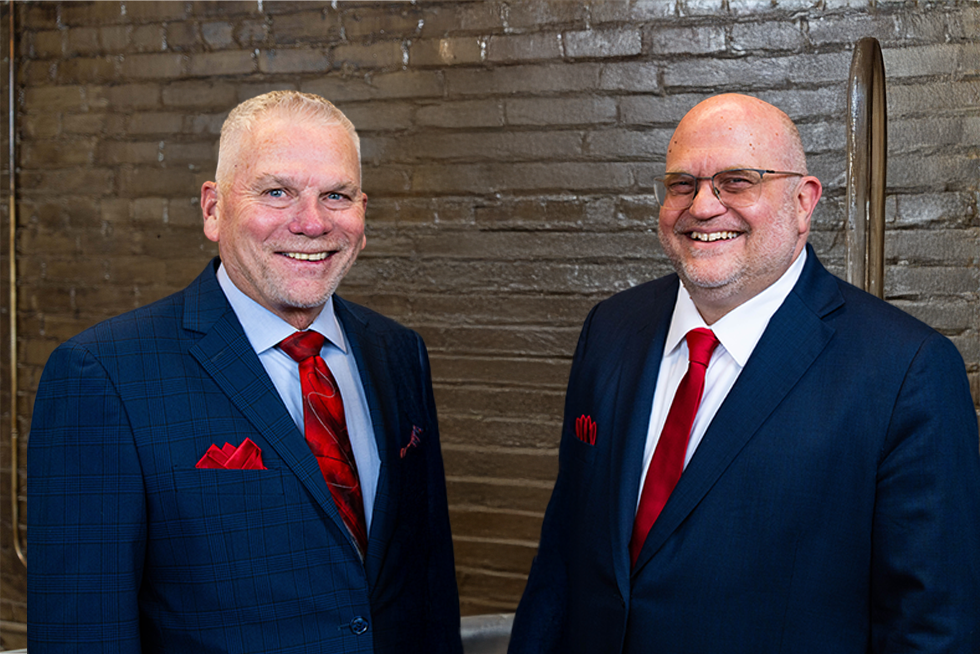
In this episode of Food Secure Nation, Dr. Phil Knight and Gerry Brisson sit down with Brian McGrain, Executive Director of Michigan Community Action, for a conversation that models the kind of collaboration required to move to the next frontier of food security. Together, they explore how Community Action Agencies and food banks—alongside schools, health systems, and workforce partners—must move beyond parallel efforts and into coordinated, community-driven solutions.

At the center of the conversation is a defining truth: families do not experience our systems separately—they experience whether life works. When systems are disconnected, people are left to navigate the gaps. But when leaders align their strengths, they can blend those systems into coordinated solutions that meet real-life needs.

This episode is an example of what it looks like to lead beyond organizational boundaries—activating the six dimensions of food security in practice, not theory—and a challenge to leaders everywhere: if the goal is real outcomes, then partnership isn’t a strategy. It’s a requirement.

Food security takes shape when communities align around the people they serve. In this episode of Food Secure Nation, Dr. Phil Knight and Gerry Brisson welcome Brian McGrain, Executive Director of Michigan Community Action, for a conversation that models the kind of partnership required to move to the next frontier of this work.

McGrain represents 27 Community Action Agencies across Michigan, part of a national network of nearly 1,000 agencies working to address the conditions that keep families in crisis. Serving all 83 counties, these agencies operate across housing, food access, utility assistance, early childhood programs, financial empowerment, and more—bringing a comprehensive, community-based approach to stability and self-sufficiency.

At the center of the conversation is a defining truth: families do not experience our systems separately—they experience whether life works.

A parent trying to put food on the table may also be facing housing instability, rising utility costs, transportation challenges, and wages that are not keeping up with the cost of living. When systems are disconnected, people are left to navigate the gaps. When leaders align their strengths, they can blend those systems into coordinated solutions that meet real-life needs.

That is where real progress happens.

Food banks, Community Action Agencies, health systems, schools, workforce programs, and local leaders each bring something essential. When those strengths are intentionally connected, communities begin to activate the six dimensions of food security—availability, access, utilization, stability, sustainability, and agency. No single organization carries all six, but together, they can.

McGrain highlights that Community Action Agencies are locally governed, deeply connected to the communities they serve, and grounded in lived experience. That perspective ensures that solutions are shaped with people, not simply delivered to them.

The conversation also acknowledges the real-world tension leaders face—local governance, funding structures, contracts, and service boundaries. These realities matter, but they cannot become barriers. The work ahead requires leaders who are willing to navigate the gaps and blend systems into something better for the people depending on them.

The closing challenge is clear: if we’re serious about outcomes, partnership isn’t optional. It’s a requirement.

People don’t experience our programs—they experience whether life works. If we’re making it harder to be poor, it won’t matter who delivers the service—only whether the need gets met.

Brian McGrain

KBDB fish icon in blue

Brian McGrain

Brian McGrain is the Executive Director of Michigan Community Action, representing 27 Community Action Agencies serving all 83 counties across the state. Part of a national network, these agencies work across housing, food access, and financial stability to help individuals and families move from crisis toward self-sufficiency.

With more than 20 years of experience in community development and public policy, Brian brings a practical, people-centered approach to his leadership—focused on connecting systems and strengthening communities through collaboration.

Brian McGrain

Executive Director of Michigan Community Action

What does it really take to create access to food?

In this episode, Stacy Dean brings a rare, full-spectrum perspective — from national policy to federal implementation to global systems leadership. Together, we explore how access is shaped, why it often falls short, and what it will take to build a food system that delivers real choice, stability, and dignity for every community.

When Stacy Dean joined Food Secure Nation, the conversation centered on one deceptively simple word: access.

Across her career — from shaping national nutrition policy, to administering SNAP, WIC, and school meals at the U.S. Department of Agriculture, to now leading the Global Food Institute at George Washington University — Stacy has influenced how access to food is designed, implemented, and improved. Her work reflects a clear truth: leadership shapes systems, and systems determine whether families can obtain the food they need.

As Stacy explained, access is far more complex than proximity to a grocery store. It is shaped by income, transportation, safety, infrastructure, technology, cultural responsiveness, and trust. When even one of these factors breaks down, access weakens. What seems like a simple question — “Can people get food?” — is a systems challenge that varies widely across communities.

At the Global Food Institute, Stacy is advancing an interdisciplinary approach to building a more sustainable and equitable food system. From climate impact and food waste to supply chains and digital delivery, the future of access is evolving — and so must the way we understand and measure it.

Throughout the conversation, one theme stood out: solutions must be built with communities, not simply delivered to them. People experiencing food insecurity are not problems to be solved, but partners in designing what works. When leadership focuses on expanding options and strengthening systems, access becomes more stable, more dignified, and more resilient — and that is how we build a Food Secure Nation.

Access is what determines whether a system works — or whether people fall through the cracks.

Stacy Dean

KBDB fish icon in blue

Stacy Dean is a nationally recognized leader in food policy and nutrition programs, currently serving as Director of the Global Food Institute at George Washington University. Over the course of her career, she has shaped and implemented some of the nation’s most critical food assistance programs, including SNAP, WIC, and school meals.

Prior to joining George Washington University, Stacy served at the United States Department of Agriculture, where she led the Food and Nutrition Service, overseeing federal nutrition programs that support millions of Americans. Before her time in federal service, she spent more than two decades at the Center on Budget and Policy Priorities, helping to design and advance policies to strengthen food access and reduce poverty.

Today, Stacy brings a global, interdisciplinary perspective to food systems, working across sectors to advance solutions that are sustainable, equitable, and rooted in the lived experience of communities.

Stacy Dean

Director, Global Food Institute, George Washington University