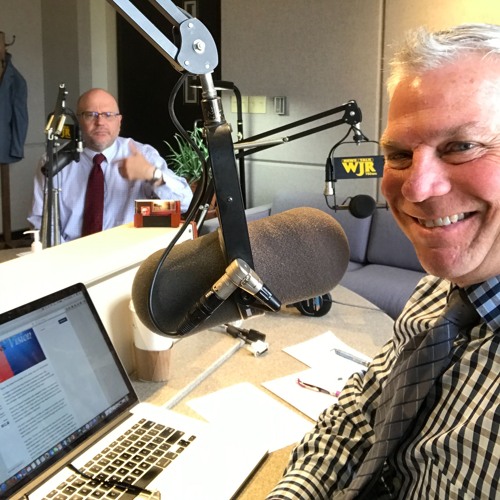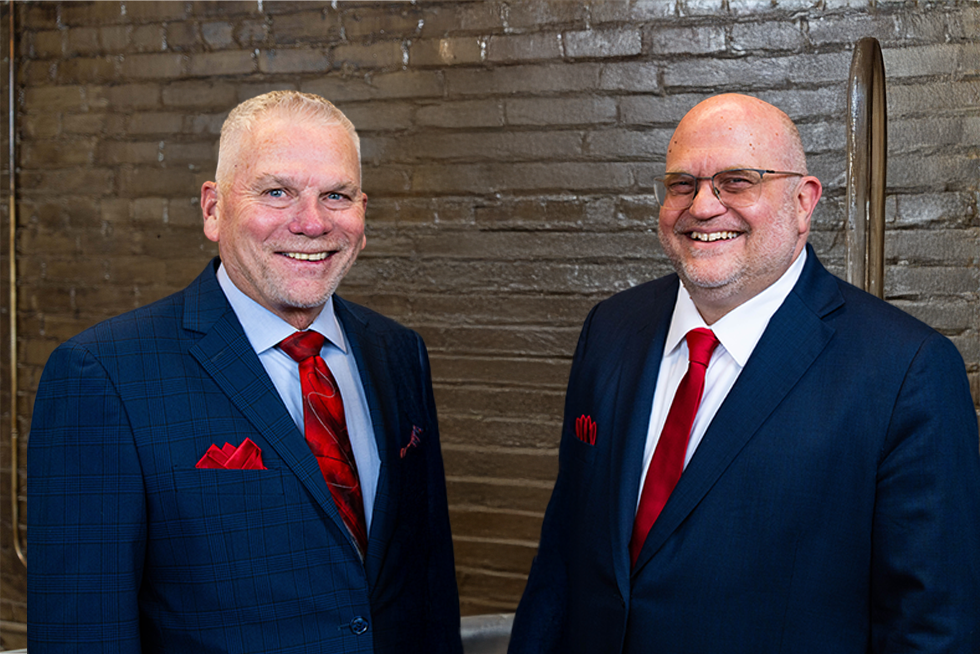
Behind every meal served is a system most people never see.

In this episode, Liz Lowe shares her journey from growing up in a food-insecure household to helping organizations across the country build sustainable funding strategies. Alongside Phil and Gerry Brisson, she explores how funding, relationships, and lived experience come together to shape what’s possible in the fight for food security.

This episode flips a core assumption on its head: food banks don’t run on food—they run on funding. And until we fully confront that truth, we will keep limiting what’s possible.

Joined by Liz Lowe, a national fund development leader with lived experience of food insecurity, Phil and Gerry Brisson unpack a reality hiding in plain sight—the way we fund the mission is shaping the mission itself. Every meal distributed, every truck on the road, every partnership formed is not just an act of service—it’s the result of a financial system quietly determining scale, consistency, and impact.

Liz brings both personal conviction and professional clarity, reframing fund development from a “support function” to a central operating force. This isn’t transactional—it’s structural. Funding fuels infrastructure, drives access, enables dignity, and ultimately determines whether the system expands…or stalls.

It challenges the field to rethink who must be at the table and what truly drives change. People experiencing hunger bring essential insight the system cannot afford to ignore. Real progress happens when that perspective is aligned with strong leadership, smart strategy, and sustainable funding.

Because in the end, if we want better outcomes, we can’t just move more food.

We have to rethink what’s underneath it.

Funding isn’t separate from the mission—it’s what allows the mission to exist consistently.

Liz Lowe

KBDB fish icon in blue

Liz Lowe

Liz Lowe is Vice President of Client Relations at the Allegiance Group, partnering with mission-driven organizations to strengthen fund development and build sustainable revenue systems. With over 20 years of experience in the charitable food sector—and lived experience growing up in a food-insecure household—Liz brings both insight and authenticity to her work. She is increasingly using her voice to elevate the realities of food insecurity and advocate for solutions grounded in dignity, community, and long-term impact.

Liz Lowe

Vice President of Client Relations at the Allegiance Group

This episode goes beyond inspiration and gets to the real challenge at the heart of food security: not a lack of caring, not a lack of ideas, but a lack of connection.

Dr. Phil Knight and Gerry Brisson reflect on decades of experience to unpack why so much good work struggles to scale, and why better frameworks, shared learning, and the Six Dimensions of Food Security may be the key to moving from isolated effort to real national progress. If you want to understand what connects the voices, vision, and momentum behind Food Secure Nation, this is the episode that brings it all together.

This episode of Food Secure Nation pulls back the curtain on a hard truth: food insecurity has never been a problem of caring, or even a lack of good ideas. It has been a problem of connection.

After decades of experience across communities, systems, and even continents, Dr. Phil Knight and Gerry Brisson confront a reality many in the field feel but rarely name. Progress is happening, but the system still feels stuck. Why? Because some of the best thinking is still happening in isolation. Great ideas emerge, inspire, and then disappear before they can be shared, tested, and scaled.

This conversation marks a turning point, because it does more than name the problem. It begins to name the path forward.

Through the lens of Know Better, Do Better, we introduce a more powerful way ahead, rooted in shared learning, practical application, and a unifying framework: the Six Dimensions of Food Security. From something as simple as winter squash to complex healthcare partnerships, they show how better thinking can sharpen decisions, strengthen systems, and unlock better outcomes, often without adding cost.

This is where the conversation moves beyond commentary. It becomes an invitation.
With a vision to connect leaders, ideas, and real-world pilots across the country, this episode lays the groundwork for a new kind of progress, one that turns insight into action and isolated effort into collective impact.

Because the future of food security will not be built by working harder in silos.

It will be built when we learn together, act together, and scale what works.

And as the guys remind us:
“The challenge was never knowledge… it was connection.”

Hope is a dangerous thing… if it never turns into strategy.

Gerry Brisson

KBDB fish icon in blue

“When you center the person experiencing hunger, everything else gets clearer — strategy, partnerships, even accountability.”

As she steps down as CEO of Feeding America, Claire Babineaux-Fontenot shares the leadership philosophy that helped reshape the national hunger conversation. At the heart of it: agency. What happens when people experiencing hunger are no longer on the margins—but at the center of decision-making? This episode explores the courage, tension, and impact of that shift.


In this episode of Food Secure Nation, Dr. Phil Knight and Gerry Brisson welcome Claire Babineaux-Fontenot, CEO of Feeding America, for a conversation about leadership, dignity, and the evolution of the national hunger-relief movement. As Claire prepares transition from her role leading the nation’s largest hunger-relief network, she reflects the leadership lessons, cultural shifts, and strategic decisions that helped reshape how the Feeding America network understands its mission.

At the heart of the conversation is a simple but transformative idea: the charitable food system does not exist to serve institutions—it exists to serve people experiencing hunger. Claire describes how, early in her tenure, she challenged two competing assumptions within large systems: that national organizations should either direct the work of local partners or simply serve them. Instead, she reframed from the mission around a shared commitment—food banks, national leaders, partners, and communities working together as co-equals in service to families facing hunger.

This shift helped reorient the network’s thinking toward the lived experience of people facing food insecurity. Rather than treating individuals experiencing hunger as passive recipients of charity, Claire and the network began recognizing them as experts in their own experience. By elevating lived expertise—listening to people not just as storytellers but as guides for decision-making—the network began asking better questions and designing better solutions.

One example came during the development of Feeding America’s first federated Network Strategic Framework. While leaders discussed how the system should improve data collection, a participant with lived experience challenged the group with a simple insight: if data truly serves people facing hunger, then it should help them answer the most immediate question—Where can I find food? That moment reshaped the conversation and demonstrated how centering lived experience can sharpen strategy and reveal blind spots that institutions alone might miss.

Claire also reflects on a powerful moment during the White House Conference on Hunger, Nutrition, and Health, where she brought individuals with lived experience as her “entourage.” When offered a seat among dignitaries at the front of the room, she chose instead to sit in the back with the individuals whose voices had helped shape national policy. In that moment, as one woman realized the President of the United States was speaking words drawn from her own story, Claire witnessed what true agency looks like—when people experiencing hunger are not spoken for but heard.

Throughout the conversation, Claire emphasizes that meaningful change in complex social systems requires both humility and courage. Leaders must be willing to evolve, to acknowledge past assumptions, and to build systems that invite participation rather than impose solutions. When people experiencing hunger are seen as partners in solving the problem—not as problems to be solved—the path to lasting progress becomes clearer.

As the episode concludes, Knight and Brisson reflect on Claire’s legacy: a leadership style rooted in compassion, curiosity, and truth-telling. By helping the hunger-relief network refocus on dignity, agency, and collaboration, Claire’s influence continues to shape how communities across the country work together to build a more food secure nation.

Agency doesn’t slow the work down. It makes the work finally fit.

Claire Babineaux-Fontenot

KBDB fish icon in blue

Claire Babineaux-Fontenot is the outgoing CEO of Feeding America, the nation’s largest hunger-relief organization. A nationally recognized leader on poverty, dignity, and systems change, she has guided the network through some of the most challenging moments in recent history — including the COVID-19 pandemic and rising food insecurity across the country.

Before joining Feeding America, Claire built a distinguished career in law and corporate leadership, including serving as Executive Vice President and Treasurer at Walmart. But what defines her leadership is not just her résumé — it’s her conviction.

During her tenure, Claire helped reframe the national hunger conversation by centering the voices and experiences of people facing food insecurity, elevating dignity and agency as essential to lasting solutions. Her leadership has been widely recognized, including being named one of TIME’s Women of the Year.

Claire’s work continues to shape how leaders across sectors think about trust, equity, and what it truly means to build a food secure nation.

Claire Babineaux-Fontenot

Former CEO of Feeding America

What does it really take to create access to food?

In this episode, Stacy Dean brings a rare, full-spectrum perspective — from national policy to federal implementation to global systems leadership. Together, we explore how access is shaped, why it often falls short, and what it will take to build a food system that delivers real choice, stability, and dignity for every community.

When Stacy Dean joined Food Secure Nation, the conversation centered on one deceptively simple word: access.

Across her career — from shaping national nutrition policy, to administering SNAP, WIC, and school meals at the U.S. Department of Agriculture, to now leading the Global Food Institute at George Washington University — Stacy has influenced how access to food is designed, implemented, and improved. Her work reflects a clear truth: leadership shapes systems, and systems determine whether families can obtain the food they need.

As Stacy explained, access is far more complex than proximity to a grocery store. It is shaped by income, transportation, safety, infrastructure, technology, cultural responsiveness, and trust. When even one of these factors breaks down, access weakens. What seems like a simple question — “Can people get food?” — is a systems challenge that varies widely across communities.

At the Global Food Institute, Stacy is advancing an interdisciplinary approach to building a more sustainable and equitable food system. From climate impact and food waste to supply chains and digital delivery, the future of access is evolving — and so must the way we understand and measure it.

Throughout the conversation, one theme stood out: solutions must be built with communities, not simply delivered to them. People experiencing food insecurity are not problems to be solved, but partners in designing what works. When leadership focuses on expanding options and strengthening systems, access becomes more stable, more dignified, and more resilient — and that is how we build a Food Secure Nation.

Access is what determines whether a system works — or whether people fall through the cracks.

Stacy Dean

KBDB fish icon in blue

Stacy Dean is a nationally recognized leader in food policy and nutrition programs, currently serving as Director of the Global Food Institute at George Washington University. Over the course of her career, she has shaped and implemented some of the nation’s most critical food assistance programs, including SNAP, WIC, and school meals.

Prior to joining George Washington University, Stacy served at the United States Department of Agriculture, where she led the Food and Nutrition Service, overseeing federal nutrition programs that support millions of Americans. Before her time in federal service, she spent more than two decades at the Center on Budget and Policy Priorities, helping to design and advance policies to strengthen food access and reduce poverty.

Today, Stacy brings a global, interdisciplinary perspective to food systems, working across sectors to advance solutions that are sustainable, equitable, and rooted in the lived experience of communities.

Stacy Dean

Director, Global Food Institute, George Washington University

Gerry and Phil sit down with Virginia Witherspoon, the Executive leading Channel One Food Bank in MN.

She chairs the National Advisory Committee for Feeding America. Lawery, CEO and Chairperson – 3 Chairs, Unique Perspectives from Virginia Witherspoon.


What happens when one leader sees the food security system from three different vantage points at once?

In this episode of Food Secure Nation, Dr. Phil Knight and Gerry Brisson sit down with Virginia Witherspoon to explore how legal training, local leadership, and national governance intersect in a system under pressure.

From navigating post-pandemic resource challenges to rethinking how dignity shapes service delivery, this conversation offers a rare look at how real decisions are made—and what it will take to build a stronger, more aligned national response to hunger.

Dignity is free. It costs nothing to welcome someone well, trust them, and treat them like a shopper instead of a client.

Virginia Witherspoon

KBDB fish icon in blue

Virginia Witherspoon serves as CEO of Channel One Regional Food Bank and Chair of the National Advisory Committee for Feeding America. A trained attorney, she brings a unique blend of legal precision, operational leadership, and governance expertise to the fight against hunger. Her work is grounded in a deep commitment to dignity, data-informed decision making, and ensuring that the voices of people experiencing food insecurity shape the systems designed to serve them.

Virginia Witherspoon

Executive and Operational Leadership

Dr. Phil Knight and Gerry Brisson sit down with Tory Martin, leader at the Dorothy A. Johnson Center for Philanthropy.

Our guest, Tory Martin, is a leader at the Dorothy A. Johnson Center for Philanthropy, where she helps study and interpret national trends shaping the nonprofit and philanthropic world. Her work looks beyond headlines to examine how trust, technology, and data are reshaping how nonprofits operate and how the public experiences their work.

Wake-Up Call to the Nonprofit Sector: Trust Is the New Currency

In this compelling episode of Food Secure Nation, Dr. Phil Knight and Gerry Brisson sit down with Tory Martin, Director of Engagement and Knowledge Building at the Dorothy A. Johnson Center for Philanthropy, to unpack the implications of the 11 Trends in Philanthropy report and what it means for nonprofits navigating a season of profound change. The conversation is both candid and urgent. The central message is unmistakable: good intentions are no longer enough. Nonprofits must demonstrate good work.

Trust, as discussed in the episode, is not soft sentiment—it is an accelerant. Drawing on leadership insights from Stephen R. Covey and John C. Maxwell, the hosts frame trust as the fruit of real relationship. Yet the Johnson Center’s research highlights a troubling reality. While nonprofits continue to rank high in perceived ethical behavior, they do not consistently rank high in perceived competence. That distinction matters. In an environment where public expectations are rising and scrutiny is intensifying, organizations must not only care deeply about their missions—they must clearly show measurable, credible impact.

One of the most practical insights from the report centers on language. Nonprofits often speak in sector-specific jargon that creates distance rather than connection. Trust grows through proximity and clarity. When organizations communicate in language that everyday people can understand, they reduce barriers, strengthen transparency, and reinforce credibility. Talking like a neighbor instead of an industry insider is not a branding tweak—it is a trust-building strategy.

The episode also confronts the unavoidable rise of artificial intelligence. AI is not a future consideration; it is a present reality. Organizations that ignore it risk falling behind. At the same time, AI without human oversight carries serious risks, including bias amplification and ethical blind spots. The Johnson Center emphasizes that responsible innovation requires strong data infrastructure and human-led judgment. AI is a tool—not a replacement for wisdom, compassion, or accountability. Used well, it can accelerate knowledge and deepen insight. Used poorly, it can undermine trust.

Closely connected to the AI conversation is the growing need for data with context. Numbers alone do not tell the whole story. Participatory approaches—where communities help interpret and give meaning to the data they generate—build legitimacy and shared ownership. When lived experience informs analysis, competence becomes more visible and trust becomes more durable.

Finally, the conversation recognizes that this moment of instability may also be a moment of innovation. As government roles shift and funding landscapes change, nonprofits will need to deepen cross-sector partnerships and rethink traditional approaches. Clear-eyed honesty about what nonprofits can—and cannot—solve alone is critical. Overstating impact erodes credibility. Clarity strengthens it.

The overarching takeaway is simple but demanding: credibility is built when claims match capacity. Strong missions do not require exaggeration; they require integrity. In a time when expectations are rising and trust is fragile, the nonprofit sector must speak plainly, show competence, embrace innovation responsibly, and align words with work. That alignment is not just good communications practice—it is the foundation for building lasting food security and a stronger nonprofit sector.

Credibility is built when claims match capacity. Strong missions do not require exaggeration, they require integrity

KBDB fish icon in blue

Tory Martin: Director of Engagement and Knowledge-Building for the Dorothy A. Johnson Center for Philanthropy

Tory Martin brings a unique blend of strategic communications expertise and cross-sector experience to the table, currently serving as the Director of Engagement and Knowledge-Building at the Dorothy A. Johnson Center for Philanthropy.

With a background that includes key roles at National Public Radio (NPR) and the Smithsonian Institution, Tory acts as an “integrative force” in the center’s mission to bridge the gap between academic research and real-world nonprofit practice. She provides creative oversight for the center’s digital strategy and funder stewardship, while also spearheading major knowledge-sharing initiatives like The Foundation Review and the annual 11 Trends in Philanthropy report.

In this episode, Tory offers a candid look at the evolving expectations for the nonprofit sector, emphasizing that “good intentions are no longer enough”. Drawing from her leadership in tracking sector-wide shifts, she discusses the critical need for organizations to move past industry jargon and build trust through clarity, proximity, and measurable impact. Tory highlights how responsible innovation—particularly the integration of AI and participatory data—can help nonprofits navigate a season of profound change and strengthen the social safety net for the long term.

Tory Martin

Director of communications and engagement

Dr. Phil Knight and Gerry Brisson sit down with Melissa Cherney, CEO of the Rhode Island Community Food Bank and Chair of the Public Engagement Advisory Committee for Feeding America.

Together, they explore what real influence looks like in the fight against hunger—not headline-making power, but steady, principled leadership grounded in lived experience, operational excellence, and a national policy perspective

The Six Dimensions Revealed

Although the Six Dimensions of Food Security were not explicitly named during the conversation, each one surfaced naturally through the lived experience, operational insight, and policy leadership shared by Dr. Phil Knight, Gerry Brisson, and Melissa Cherney.

Availability emerged through the practical realities of moving food across vast geography—from serving more than 70,000 square miles in North Dakota to leveraging federal commodity programs like TEFAP. The discussion made clear that food security begins with ensuring food is physically present in communities, whether through local purchasing, national procurement, or coordinated federal investment.

Access revealed itself through deeply personal stories. Both Melissa and Dr. Knight shared experiences navigating SNAP during seasons of vulnerability, highlighting the administrative burdens, eligibility thresholds, and bureaucratic friction that often stand between families and the assistance designed to help them. The conversation underscored that access is not simply about eligibility—it is about reliability, dignity, and trust in the systems that deliver support.

Utilization surfaced in the evolution of food banking itself. The shift from distributing whatever food could be recovered to ensuring the right food, at the right time, in the right quantities reflects a growing understanding that nourishment—not just calories—matters. Every household has unique needs, and effective food security must consider health, culture, and usability.

Stability ran throughout the episode in discussions of federal shutdowns, SNAP policy shifts, and the fragility of benefit continuity. When programs pause or change abruptly, families experience instability that erodes trust and planning capacity. Advocacy, even when imperfect, plays a critical role in protecting that stability and lessening harm.

Sustainability appeared most powerfully in the conversation about aligning food banking with local agriculture. By investing millions of dollars annually into local growers, food banks can strengthen regional economies while preventing hunger upstream. Food security and agricultural viability are not separate systems—they are interdependent.

Finally, Agency was woven through the personal narratives shared. Hunger was described not as an identity but as a circumstance. Applying for SNAP required courage; leaving it behind restored independence. At the national level, Melissa’s leadership of Feeding America’s Public Engagement Advisory Committee reflects collective agency—ensuring that those closest to hunger solutions have a voice in shaping policy.

Taken together, this episode demonstrates that the Six Dimensions are not abstract theory. They are already embedded in how thoughtful leaders approach hunger—intuitively, holistically, and systemically. When the dimensions align, communities move closer to the next threshold of food security.

Perhaps most encouraging, this episode demonstrates that the Six Dimensions are no longer theoretical constructs — they are becoming instinctive lenses through which experienced leaders evaluate policy, operations, and human impact.

Policy Impact

This Is What Leadership Looks Like

As Chair of the Public Engagement Advisory Committee for Feeding America, Melissa Cherney helps shape federal policies that impact families in every county in the United States.

From this conversation, three national imperatives rise:

Align Agriculture & Hunger Policy for Prosperity for All
Invest in farmers. Strengthen local economies. Prevent hunger upstream.

Safeguard and Evaluate SNAP but First Do No Harm
Stability builds trust. Trust builds resilience.

Create Program Alignment to Achieve Desired Outcomes
No one should lose food assistance because of bureaucratic misfires.

We are not here simply to move food. We are here to strengthen the system that determines who gets it, how much they receive, and for how long. That is how a nation becomes food secure.

KBDB fish icon in blue

Melissa brings a rare combination to the national stage:

  • Nearly two decades of food bank leadership—from the rural expanse of North Dakota to the densely populated communities of Rhode Island.
  • Firsthand experience with food insecurity as a college student navigating SNAP benefits.
  • A deep understanding that hunger does not define a person—it reflects a circumstance.

Her story reinforces a critical truth: hunger hides in plain sight. The face of food insecurity looks like any one of us.

Melissa brings a rare and powerful combination to the national stage. With nearly two decades of food bank leadership spanning the rural expanse of North Dakota to the densely populated communities of Rhode Island, she understands both the geographic and systemic realities of hunger in America. Her leadership is informed not only by executive experience, but by personal history. As a college student navigating a season of food insecurity and receiving SNAP benefits for a short time, she learned firsthand that hunger does not define a person—it reflects a circumstance. That lived experience did not limit her; it shaped her.

Her story reinforces a critical truth that echoes throughout the conversation: hunger hides in plain sight. The face of food insecurity looks like any one of us. It can be a farm kid from North Dakota, a struggling student trying to make tuition and rent work, or a working family navigating an unexpected disruption. This episode reminds listeners that the work of building a food secure nation begins with understanding the dignity, resilience, and agency of the people at the center of the issue.

Melissa Cherney

CEO of the Rhode Island Community Food Bank

The Six Dimensions of Food Security

Policies, programs and being people centric helps create a stable food supply chain. Scott Piggott, a farmer discusses with Gerry and Phil the realities of how programs designed to support agriculture need to be stable so our access to food is as well.

In this episode of Food Secure Nation, Dr. Phil Knight and Gerry Brisson lay down the framework that will guide the entire series: the Six Dimensions of Food Security.

They start by naming what most people in this work already feel in their bones: food insecurity persists not because people don’t care, not because we lack food, and not because we lack committed organizations, donors, volunteers, and public servants. Food insecurity persists because it doesn’t live in just one place. It shows up differently depending on where you stand—access, affordability, nutrition, dignity, reliability—and when we focus on only one piece, we might make progress, but we rarely make it last.

That’s the point of the six dimensions: not to tell people what to think, but to help all of us think better—to step back, see the whole system, and understand where misalignment creates gaps families can fall through.

Gerry walks through the six dimensions in plain language:

  • Availability – Is there food at all?
  • Access – If it exists, can you reach it and afford it?
  • Utilization – Is it the right food for your life, culture, and health—and can you actually use it?
  • Agency – Do you have the capacity, choice, and control to turn what’s available into food security for your household?
  • Stability – Will it be there when I need it?
  • Sustainability – Will it be there as long as it’s needed?

A key insight lands hard: we need solutions in each dimension, and we must design any solution with all six dimensions in mind. Build a grocery store? Great—unless it’s unaffordable, unreachable, culturally mismatched, too complex to use, unstable, or dependent on fragile funding.

Phil and Gerry make it memorable with two analogies: a marching band (you can’t build a band out of only tubas) and a football team (a great quarterback without a line gets crushed). Translation: your lane matters—but your lane isn’t the whole road.

The episode closes with the heart of the show’s mission: communities become food secure when strong efforts stop operating in isolation and partners understand how their work fits together. The next episodes bring experts to each dimension—starting with Claire Babineaux-Fontenot on Agency, then voices like Stacy Dean and Dr. Dawn Opel to deepen the conversation.

Food for Thought: You don’t have to do everything to create a food secure community, but everything does have to get done. The question is: Which dimension am I strongest in, and who do I need beside me for the rest?

KBDB fish icon in blue

Scott Piggott shares his insights on Food Security.

As the Executive Director of the Michigan Corn Growers Association and a veteran leader in agricultural policy, Scott brings over 20 years of expertise to our discussion on the Stability of our food systems.

He joins the show to talk about how policies designed to support farmers are the bedrock of a reliable food supply chain for every American household. From his work with the Michigan Farm Bureau to his role on the Food Bank Council of Michigan, Scott reveals why a stable agricultural framework is essential to moving from awareness to bold action.

Scott Piggott

Executive Director of the Michigan Corn Growers Association

  • The Six Dimensions of Food Security
    No.
    1
    Food Safety Infrastructure | Utilization

    The Six Dimensions of Food Security

    If our goal is a food secure America, changemakers need to consider all six pillars of food security when we think about our work.