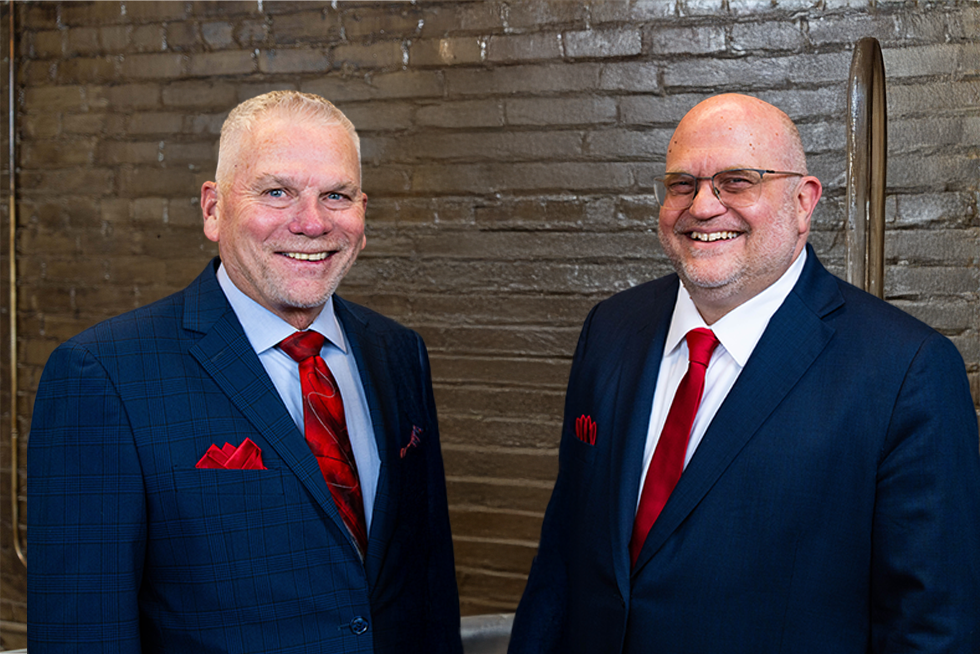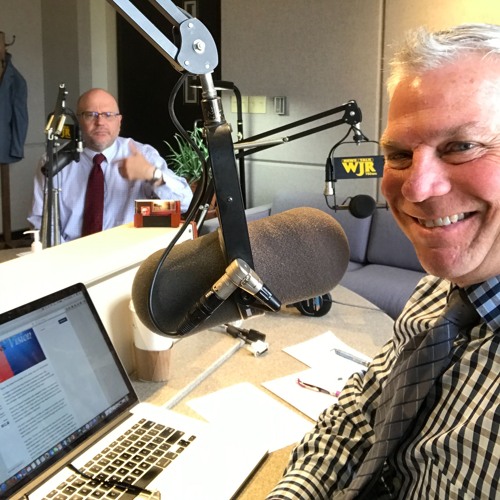
Dr. Phil Knight and Gerry Brisson sit down with Melissa Cherney, CEO of the Rhode Island Community Food Bank and Chair of the Public Engagement Advisory Committee for Feeding America.

Together, they explore what real influence looks like in the fight against hunger—not headline-making power, but steady, principled leadership grounded in lived experience, operational excellence, and a national policy perspective

The Six Dimensions Revealed

Although the Six Dimensions of Food Security were not explicitly named during the conversation, each one surfaced naturally through the lived experience, operational insight, and policy leadership shared by Dr. Phil Knight, Gerry Brisson, and Melissa Cherney.

Availability emerged through the practical realities of moving food across vast geography—from serving more than 70,000 square miles in North Dakota to leveraging federal commodity programs like TEFAP. The discussion made clear that food security begins with ensuring food is physically present in communities, whether through local purchasing, national procurement, or coordinated federal investment.

Access revealed itself through deeply personal stories. Both Melissa and Dr. Knight shared experiences navigating SNAP during seasons of vulnerability, highlighting the administrative burdens, eligibility thresholds, and bureaucratic friction that often stand between families and the assistance designed to help them. The conversation underscored that access is not simply about eligibility—it is about reliability, dignity, and trust in the systems that deliver support.

Utilization surfaced in the evolution of food banking itself. The shift from distributing whatever food could be recovered to ensuring the right food, at the right time, in the right quantities reflects a growing understanding that nourishment—not just calories—matters. Every household has unique needs, and effective food security must consider health, culture, and usability.

Stability ran throughout the episode in discussions of federal shutdowns, SNAP policy shifts, and the fragility of benefit continuity. When programs pause or change abruptly, families experience instability that erodes trust and planning capacity. Advocacy, even when imperfect, plays a critical role in protecting that stability and lessening harm.

Sustainability appeared most powerfully in the conversation about aligning food banking with local agriculture. By investing millions of dollars annually into local growers, food banks can strengthen regional economies while preventing hunger upstream. Food security and agricultural viability are not separate systems—they are interdependent.

Finally, Agency was woven through the personal narratives shared. Hunger was described not as an identity but as a circumstance. Applying for SNAP required courage; leaving it behind restored independence. At the national level, Melissa’s leadership of Feeding America’s Public Engagement Advisory Committee reflects collective agency—ensuring that those closest to hunger solutions have a voice in shaping policy.

Taken together, this episode demonstrates that the Six Dimensions are not abstract theory. They are already embedded in how thoughtful leaders approach hunger—intuitively, holistically, and systemically. When the dimensions align, communities move closer to the next threshold of food security.

Perhaps most encouraging, this episode demonstrates that the Six Dimensions are no longer theoretical constructs — they are becoming instinctive lenses through which experienced leaders evaluate policy, operations, and human impact.

Policy Impact

This Is What Leadership Looks Like

As Chair of the Public Engagement Advisory Committee for Feeding America, Melissa Cherney helps shape federal policies that impact families in every county in the United States.

From this conversation, three national imperatives rise:

Align Agriculture & Hunger Policy for Prosperity for All
Invest in farmers. Strengthen local economies. Prevent hunger upstream.

Safeguard and Evaluate SNAP but First Do No Harm
Stability builds trust. Trust builds resilience.

Create Program Alignment to Achieve Desired Outcomes
No one should lose food assistance because of bureaucratic misfires.

We are not here simply to move food. We are here to strengthen the system that determines who gets it, how much they receive, and for how long. That is how a nation becomes food secure.

KBDB fish icon in blue

Melissa brings a rare combination to the national stage:

  • Nearly two decades of food bank leadership—from the rural expanse of North Dakota to the densely populated communities of Rhode Island.
  • Firsthand experience with food insecurity as a college student navigating SNAP benefits.
  • A deep understanding that hunger does not define a person—it reflects a circumstance.

Her story reinforces a critical truth: hunger hides in plain sight. The face of food insecurity looks like any one of us.

Melissa brings a rare and powerful combination to the national stage. With nearly two decades of food bank leadership spanning the rural expanse of North Dakota to the densely populated communities of Rhode Island, she understands both the geographic and systemic realities of hunger in America. Her leadership is informed not only by executive experience, but by personal history. As a college student navigating a season of food insecurity and receiving SNAP benefits for a short time, she learned firsthand that hunger does not define a person—it reflects a circumstance. That lived experience did not limit her; it shaped her.

Her story reinforces a critical truth that echoes throughout the conversation: hunger hides in plain sight. The face of food insecurity looks like any one of us. It can be a farm kid from North Dakota, a struggling student trying to make tuition and rent work, or a working family navigating an unexpected disruption. This episode reminds listeners that the work of building a food secure nation begins with understanding the dignity, resilience, and agency of the people at the center of the issue.

Melissa Cherney

CEO of the Rhode Island Community Food Bank

The Six Dimensions of Food Security

Policies, programs and being people centric helps create a stable food supply chain. Scott Piggott, a farmer discusses with Gerry and Phil the realities of how programs designed to support agriculture need to be stable so our access to food is as well.

In this episode of Food Secure Nation, Dr. Phil Knight and Gerry Brisson lay down the framework that will guide the entire series: the Six Dimensions of Food Security.

They start by naming what most people in this work already feel in their bones: food insecurity persists not because people don’t care, not because we lack food, and not because we lack committed organizations, donors, volunteers, and public servants. Food insecurity persists because it doesn’t live in just one place. It shows up differently depending on where you stand—access, affordability, nutrition, dignity, reliability—and when we focus on only one piece, we might make progress, but we rarely make it last.

That’s the point of the six dimensions: not to tell people what to think, but to help all of us think better—to step back, see the whole system, and understand where misalignment creates gaps families can fall through.

Gerry walks through the six dimensions in plain language:

  • Availability – Is there food at all?
  • Access – If it exists, can you reach it and afford it?
  • Utilization – Is it the right food for your life, culture, and health—and can you actually use it?
  • Agency – Do you have the capacity, choice, and control to turn what’s available into food security for your household?
  • Stability – Will it be there when I need it?
  • Sustainability – Will it be there as long as it’s needed?

A key insight lands hard: we need solutions in each dimension, and we must design any solution with all six dimensions in mind. Build a grocery store? Great—unless it’s unaffordable, unreachable, culturally mismatched, too complex to use, unstable, or dependent on fragile funding.

Phil and Gerry make it memorable with two analogies: a marching band (you can’t build a band out of only tubas) and a football team (a great quarterback without a line gets crushed). Translation: your lane matters—but your lane isn’t the whole road.

The episode closes with the heart of the show’s mission: communities become food secure when strong efforts stop operating in isolation and partners understand how their work fits together. The next episodes bring experts to each dimension—starting with Claire Babineaux-Fontenot on Agency, then voices like Stacy Dean and Dr. Dawn Opel to deepen the conversation.

Food for Thought: You don’t have to do everything to create a food secure community, but everything does have to get done. The question is: Which dimension am I strongest in, and who do I need beside me for the rest?

KBDB fish icon in blue

Scott Piggott shares his insights on Food Security.

As the Executive Director of the Michigan Corn Growers Association and a veteran leader in agricultural policy, Scott brings over 20 years of expertise to our discussion on the Stability of our food systems.

He joins the show to talk about how policies designed to support farmers are the bedrock of a reliable food supply chain for every American household. From his work with the Michigan Farm Bureau to his role on the Food Bank Council of Michigan, Scott reveals why a stable agricultural framework is essential to moving from awareness to bold action.

Scott Piggott

Executive Director of the Michigan Corn Growers Association

  • The Six Dimensions of Food Security
    No.
    1
    Food Safety Infrastructure | Utilization

    The Six Dimensions of Food Security

    If our goal is a food secure America, changemakers need to consider all six pillars of food security when we think about our work.