
This Week's Episode
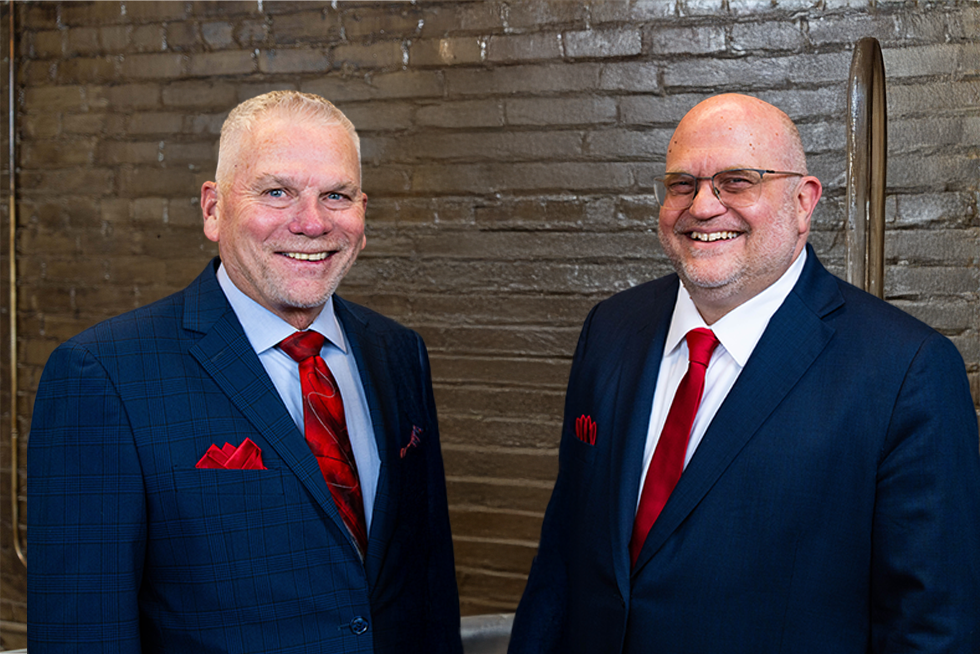
Dr. Phil Knight and Gerry Brisson sit down with Tory Martin, leader at the Dorothy A. Johnson Center for Philanthropy.
Our guest, Tory Martin, is a leader at the Dorothy A. Johnson Center for Philanthropy, where she helps study and interpret national trends shaping the nonprofit and philanthropic world. Her work looks beyond headlines to examine how trust, technology, and data are reshaping how nonprofits operate and how the public experiences their work.
On This Episode
Wake-Up Call to the Nonprofit Sector: Trust Is the New Currency
In this compelling episode of Food Secure Nation, Dr. Phil Knight and Gerry Brisson sit down with Tory Martin, Director of Engagement and Knowledge Building at the Dorothy A. Johnson Center for Philanthropy, to unpack the implications of the 11 Trends in Philanthropy report and what it means for nonprofits navigating a season of profound change. The conversation is both candid and urgent. The central message is unmistakable: good intentions are no longer enough. Nonprofits must demonstrate good work.
Trust, as discussed in the episode, is not soft sentiment—it is an accelerant. Drawing on leadership insights from Stephen R. Covey and John C. Maxwell, the hosts frame trust as the fruit of real relationship. Yet the Johnson Center’s research highlights a troubling reality. While nonprofits continue to rank high in perceived ethical behavior, they do not consistently rank high in perceived competence. That distinction matters. In an environment where public expectations are rising and scrutiny is intensifying, organizations must not only care deeply about their missions—they must clearly show measurable, credible impact.
One of the most practical insights from the report centers on language. Nonprofits often speak in sector-specific jargon that creates distance rather than connection. Trust grows through proximity and clarity. When organizations communicate in language that everyday people can understand, they reduce barriers, strengthen transparency, and reinforce credibility. Talking like a neighbor instead of an industry insider is not a branding tweak—it is a trust-building strategy.
The episode also confronts the unavoidable rise of artificial intelligence. AI is not a future consideration; it is a present reality. Organizations that ignore it risk falling behind. At the same time, AI without human oversight carries serious risks, including bias amplification and ethical blind spots. The Johnson Center emphasizes that responsible innovation requires strong data infrastructure and human-led judgment. AI is a tool—not a replacement for wisdom, compassion, or accountability. Used well, it can accelerate knowledge and deepen insight. Used poorly, it can undermine trust.
Closely connected to the AI conversation is the growing need for data with context. Numbers alone do not tell the whole story. Participatory approaches—where communities help interpret and give meaning to the data they generate—build legitimacy and shared ownership. When lived experience informs analysis, competence becomes more visible and trust becomes more durable.
Finally, the conversation recognizes that this moment of instability may also be a moment of innovation. As government roles shift and funding landscapes change, nonprofits will need to deepen cross-sector partnerships and rethink traditional approaches. Clear-eyed honesty about what nonprofits can—and cannot—solve alone is critical. Overstating impact erodes credibility. Clarity strengthens it.
The overarching takeaway is simple but demanding: credibility is built when claims match capacity. Strong missions do not require exaggeration; they require integrity. In a time when expectations are rising and trust is fragile, the nonprofit sector must speak plainly, show competence, embrace innovation responsibly, and align words with work. That alignment is not just good communications practice—it is the foundation for building lasting food security and a stronger nonprofit sector.
Credibility is built when claims match capacity. Strong missions do not require exaggeration, they require integrity

This Week's Guest
Tory Martin: Director of Engagement and Knowledge-Building for the Dorothy A. Johnson Center for Philanthropy
Tory Martin brings a unique blend of strategic communications expertise and cross-sector experience to the table, currently serving as the Director of Engagement and Knowledge-Building at the Dorothy A. Johnson Center for Philanthropy.
With a background that includes key roles at National Public Radio (NPR) and the Smithsonian Institution, Tory acts as an “integrative force” in the center’s mission to bridge the gap between academic research and real-world nonprofit practice. She provides creative oversight for the center’s digital strategy and funder stewardship, while also spearheading major knowledge-sharing initiatives like The Foundation Review and the annual 11 Trends in Philanthropy report.
In this episode, Tory offers a candid look at the evolving expectations for the nonprofit sector, emphasizing that “good intentions are no longer enough”. Drawing from her leadership in tracking sector-wide shifts, she discusses the critical need for organizations to move past industry jargon and build trust through clarity, proximity, and measurable impact. Tory highlights how responsible innovation—particularly the integration of AI and participatory data—can help nonprofits navigate a season of profound change and strengthen the social safety net for the long term.
More Episodes
-


Podcast
38 min
-

Podcast
38 min
-

Podcast
38 min
-
Podcast
54 min
-
Podcast
37 min