
This Week's Episode
Bridging Policy and Human Experience
Food Secure Nation welcomes Dr. Sheril Krishenbaum, a renown writer and scientist who cares deeply about this stubborn challenge of food security. A positive solution oriented scholar who brings her unique insight to both policy and practices of addressing hunger and creating food security.
On This Episode
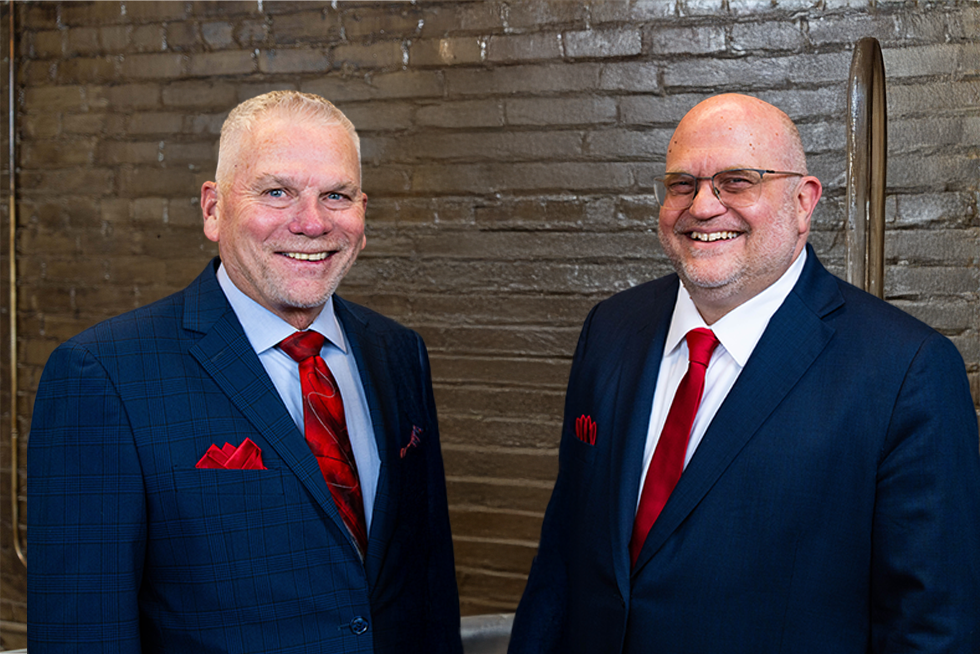
Dr. Phil Knight and Gerry Brisson are joined by Dr. Sheril Kirshenbaum, a nationally recognized expert in science, policy, and governance, for a timely and deeply substantive conversation on food security in America.
At the heart of the discussion is a shared conviction: food insecurity is not a mystery—it is a systems problem. And systems problems require more than compassion or slogans; they demand understanding, alignment, and accountability.
Using the Six Dimensions of Food Security—availability, access, utilization, stability, sustainability, and agency—the conversation explores how food insecurity is shaped not by a single failure, but by the interaction of policies across nutrition, health care, workforce participation, agriculture, and state–federal partnerships. Decisions made far from kitchen tables often ripple through families’ lives in profound and unintended ways.
Dr. Kirshenbaum brings a rare dual perspective: rigorous academic research paired with firsthand experience inside federal policymaking. She highlights how well-intentioned policies—particularly around SNAP, work requirements, and benefit eligibility—can misalign with real human behavior, creating financial cliffs and administrative burdens that discourage progress rather than support it. These misalignments are not theoretical; they shape daily decisions for families trying to stay afloat.
A central theme of the episode is trust. When governments and institutions fail to deliver on promised support, the damage extends beyond immediate funding gaps. It erodes trust among families, schools, nonprofits, and community organizations—forcing systems designed for long-term stability into perpetual crisis mode. Rebuilding that trust, the conversation argues, is as critical as restoring resources.
The episode also challenges simplistic narratives about hunger. Food security, done well, is not about dependency. It is about stability, dignity, and agency—designing systems that allow people to participate fully in their families, their work, and their communities. Storytelling matters, but only when paired with measurable outcomes and policy coherence that actually improves lives.
Ultimately, this conversation reframes food security as a shared responsibility—not a choice between government or charity, but a coordinated effort where each does what it is uniquely equipped to do, and does it well.
A food secure nation is built not by good intentions alone, but by aligned systems, earned trust, and policies centered on real human outcomes.

This Week's Guest
Dr Sheril Kirshenbaum shares her insights on Food Security.
Dr. Sheril Kirshenbaum joins the show to share her unique insights on the intersection of science, policy, and the American dinner table. As an Emmy Award-winning scientist at Michigan State University and host of the PBS series Serving Up Science, Sheril bridges the gap between rigorous academic research and the real-world decisions made in the halls of government.
In this episode, she joins Dr. Phil Knight and Gerry Brisson to dissect why food insecurity is a “systems problem” rather than a mystery. From the impact of federal SNAP policies to the critical role of institutional trust, Sheril reveals how the Six Dimensions of Food Security shape the lives of every American family. Her perspective challenges us to move beyond simple narratives and toward a food-secure nation built on dignity, agency, and measurable outcomes.
More Episodes
-



Podcast
38 min
-
Podcast
54 min
-
Podcast
37 min